Key Takeaways:
- Thoughtful material choices on the front entry can boost resale value by around 7% compared to similar homes nearby
- Fiber cement, PVC trim, and composite decking offer longer lifespans and lower maintenance than traditional wood options
- Pairing contrasting wall and trim colors is a dominant exterior trend that adds depth and highlights architectural details
- Stone veneer and brick accents deliver high visual impact at a fraction of the cost and weight of full masonry
- Lighting fixtures, house numbers, and hardware made from weather-resistant metals tie the entire facade together
- Realtors overwhelmingly agree that lawn and landscape care influences both sale price and buyer interest
- Smart material pairings solve common problems like rot, fading, warping, and dated appearances in one upgrade cycle
The space between your sidewalk and your front door does a lot of heavy lifting. It welcomes guests, shelters packages, frames family photos, and tells every passerby what kind of home sits behind it. Yet most homeowners stare at a tired entryway for years, unsure whether to patch, paint, or tear it all out and start fresh.
The real problem usually isn’t vision. It’s materials. The wrong boards warp. The wrong paint peels after one summer. The wrong railing rusts before the second winter. Choosing products built for the job turns a frustrating cycle of repairs into a one-time upgrade that holds up for decades.
This guide walks through the most common entryway headaches and matches each one with a smart material fix. By the end, you’ll know which products solve rot, fading, dated looks, and tight budgets without creating new problems down the road.
Why Does Your Entryway Look Tired So Quickly?
The usual culprit is a mismatch between the materials and the weather they face every day. Pressure-treated pine railings swell. Standard MDF trim swallows moisture. Cheap aluminum lights pit and corrode within a few seasons. When you keep replacing the same elements with the same low-grade stock, you lock yourself into a cycle of constant repair.
The fix starts with understanding your climate exposure. South-facing porches bake under UV. North-facing ones stay damp and grow mildew. Coastal homes battle salt. Each situation demands a different material profile, not a universal “porch kit” from the big-box aisle.
Materials That Actually Fight the Elements
Here are the upgrades that consistently outperform cheaper defaults:
- Fiber cement siding and skirting that resists rot, insects, and fire
- Cellular PVC trim boards that never absorb water
- Composite or capped-polymer decking for floors that won’t splinter
- Powder-coated aluminum railings that shrug off rust
- Stainless steel fasteners that stop rust streaks before they start
Pay a little more upfront, and the next paint job becomes a cosmetic refresh instead of a structural rescue.
How Much Value Does a Smart Material Upgrade Really Add?
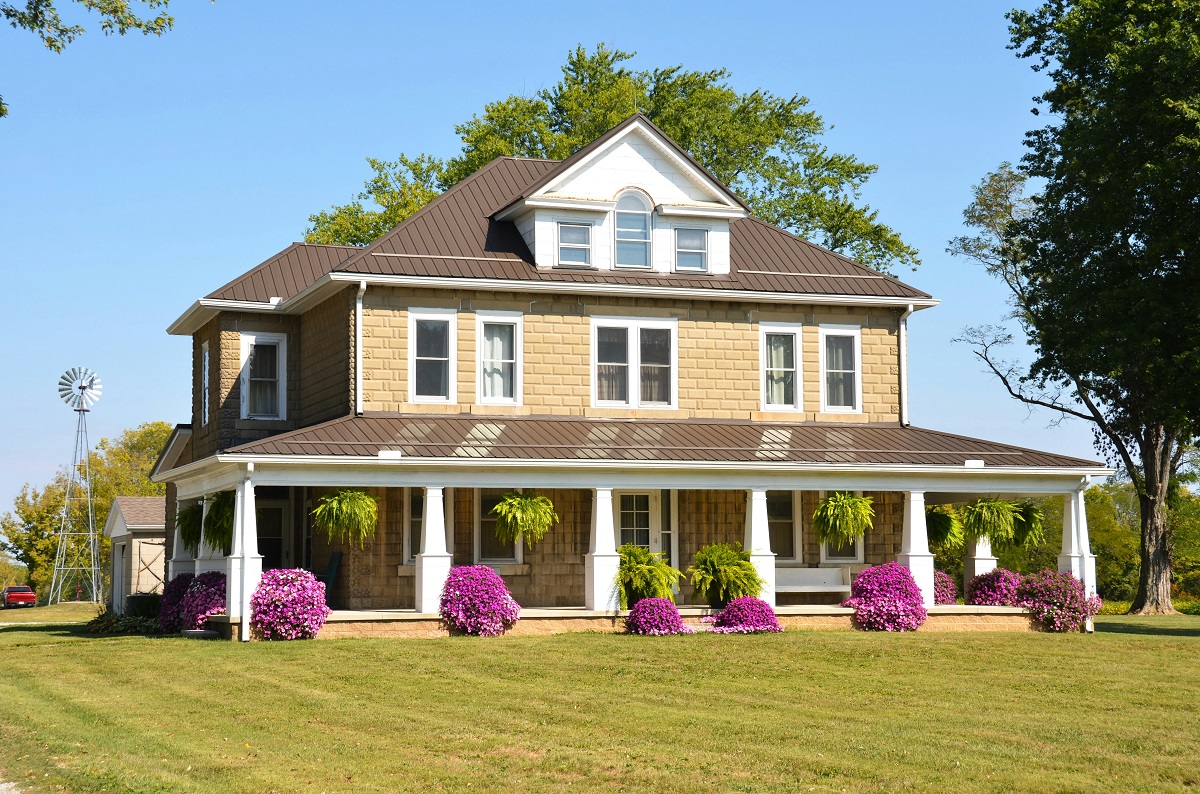
Homeowners often hesitate because they can’t picture the payoff. The numbers help. According to the University of Texas at Arlington, homes with inviting exteriors sell for roughly 7% more than comparable houses on the same block. On a $400,000 home, that premium easily funds a full entryway overhaul with money left over.
The National Association of REALTORS adds more weight to the argument. In their reporting, over half of homeowners estimate their exterior adds at least $20,000 to resale value. That’s not a vague wellness benefit. That’s cash at closing.
Framing the project this way changes the question from “can I afford this” to “can I afford to skip it.” If you’re already weighing smart budget renovations that add real value, the entry is almost always the highest-return square footage on the entire lot.
Fresh Front Porch Curb Appeal Ideas Using Contrasting Colors
Flat, single-tone facades are losing favor fast. Buyers and designers want depth, shadow, and visual rhythm, and the easiest way to get all three is through contrast. According to Houzz, nearly 69% of homeowners are now pairing contrasting wall and trim colors to make columns, window frames, and entry details pop. The shift makes sense when you consider how light behaves on a porch throughout the day. A monochrome surface flattens under direct sun and disappears into shadow by late afternoon, while a contrasting trim line catches light at the edges and keeps the architecture readable from the curb at any hour.
The trick is choosing finishes that hold those colors without constant touch-ups. Modern acrylic exterior paints bonded to fiber cement or primed PVC will stay true for 15 years or more. Cheap latex over bare softwood might fade in three. This is where front porch curb appeal ideas live or die, because a stunning color scheme that looks chalky by year four defeats the purpose. Pigment quality matters just as much as the binder. Inorganic pigments like iron oxides and titanium dioxide resist UV breakdown far better than the organic pigments often found in budget tints, which is why deep reds, bright blues, and saturated greens tend to fade first on homes painted with lower-grade product. If you want a bold accent to last, insist on a premium line and ask the retailer whether the color is tinted with lightfast pigments.
Sheen plays a quiet but important role too. Satin or low-sheen finishes on the body hide minor surface flaws and resist mildew, while semi-gloss on trim, columns, and door casings reinforces the contrast by catching light differently than the matte field around it. That subtle sheen shift is part of what makes high-end curb appeal look expensive even before you register the colors themselves.
Palette Pairings That Rarely Miss
A few combinations have proven themselves across almost every architectural style:
- Warm white body with soft black trim and a natural wood door
- Deep sage walls with creamy ivory columns
- Charcoal siding with crisp white trim and a brass-toned door
- Taupe body with espresso railings and matte black lighting
- Navy accents against a light limestone base
- Olive-drab shingles with warm bone trim and an oxblood door
- Pale greige body with chocolate-brown beams and aged copper fixtures
Pick two main tones, one accent for the door, and stop there. More than three competing colors read as busy, not layered. A useful rule from professional colorists is the 60-30-10 split: 60% body color, 30% trim and column color, and 10% for the door and small accents like house numbers or planters. Keeping those ratios tight is what separates a porch that looks professionally designed from one that looks like it was repainted in pieces over several weekends. Test every combination with large sample boards viewed at both morning and dusk before committing, because undertones shift dramatically with the color temperature of natural light.
What’s the Best Fix for a Rotting Wood Porch Floor?
Soft spots underfoot are the single most common entryway failure, and they almost always signal that water has been working on the structure for far longer than the homeowner realized. Traditional tongue-and-groove fir looks beautiful when freshly painted, but it traps moisture at every joint, especially along the hidden undersides where paint rarely reaches. Once rot starts, it spreads along the grain faster than most owners catch it, often traveling under seemingly solid finish coats until an entire row of boards gives way at once. By the time the surface telegraphs the damage, the joists and ledger below have usually taken on moisture too, which is why spot repairs so often fail within a season or two.
The modern answer is capped composite or PVC decking rated for porch applications. Unlike older composites that felt plasticky, slick, and uncomfortably hot in summer sun, today’s boards mimic the grain and matte finish of painted wood while shedding water completely. Hidden fastener systems keep the surface clean of visible screw heads, and the color runs through the cap layer so scuffs, dropped planters, and shifted furniture don’t reveal raw material underneath. Premium lines now offer convincing cathedral grain patterns, wire-brushed textures, and multi-tonal streaking that reads as authentic from arm’s length. Warranties on the better products run 25 to 50 years against fade, stain, and structural failure, which is unheard of in painted softwood.
For covered porches, narrower 3-inch planks read more traditional than the wide 5.5-inch boards used on open decks, and they align better with the historical proportions of farmhouse, Craftsman, and Colonial facades. Pair them with a solid rim band, a drip edge, and properly pitched framing of at least an eighth-inch per foot away from the house, and water never gets a chance to pool against the structure. Adding stainless or hot-dipped galvanized fasteners at the substructure level extends the life of the whole assembly, since the deck surface is only as durable as the joists carrying it. These small structural upgrades compound into front porch curb appeal ideas that look sharp on day one and still photograph well a decade later.
Signs It’s Time to Replace, Not Patch
- Spongy give when you step near column bases or door thresholds
- Paint that bubbles and lifts within a season of application
- Visible gaps opening between boards as fasteners lose their grip
- Dark staining that returns no matter how often you clean it
- Nail heads rusting through fresh coats of primer
- Musty odors beneath the porch after rain, especially in enclosed skirted areas
- Insect activity, including carpenter ants or termites drawn to softened wood fibers
Once two or more of these appear, patching costs more over five years than a full tear-out and composite rebuild, both in materials and in the repeated labor of chasing new failures each spring. A clean rebuild also gives you the chance to correct the original drainage mistakes, upgrade the framing to pressure-treated or steel, and lock in the kind of lasting curb appeal that intermittent repairs simply can’t deliver.
Can Stone and Brick Accents Work on a Small Budget?
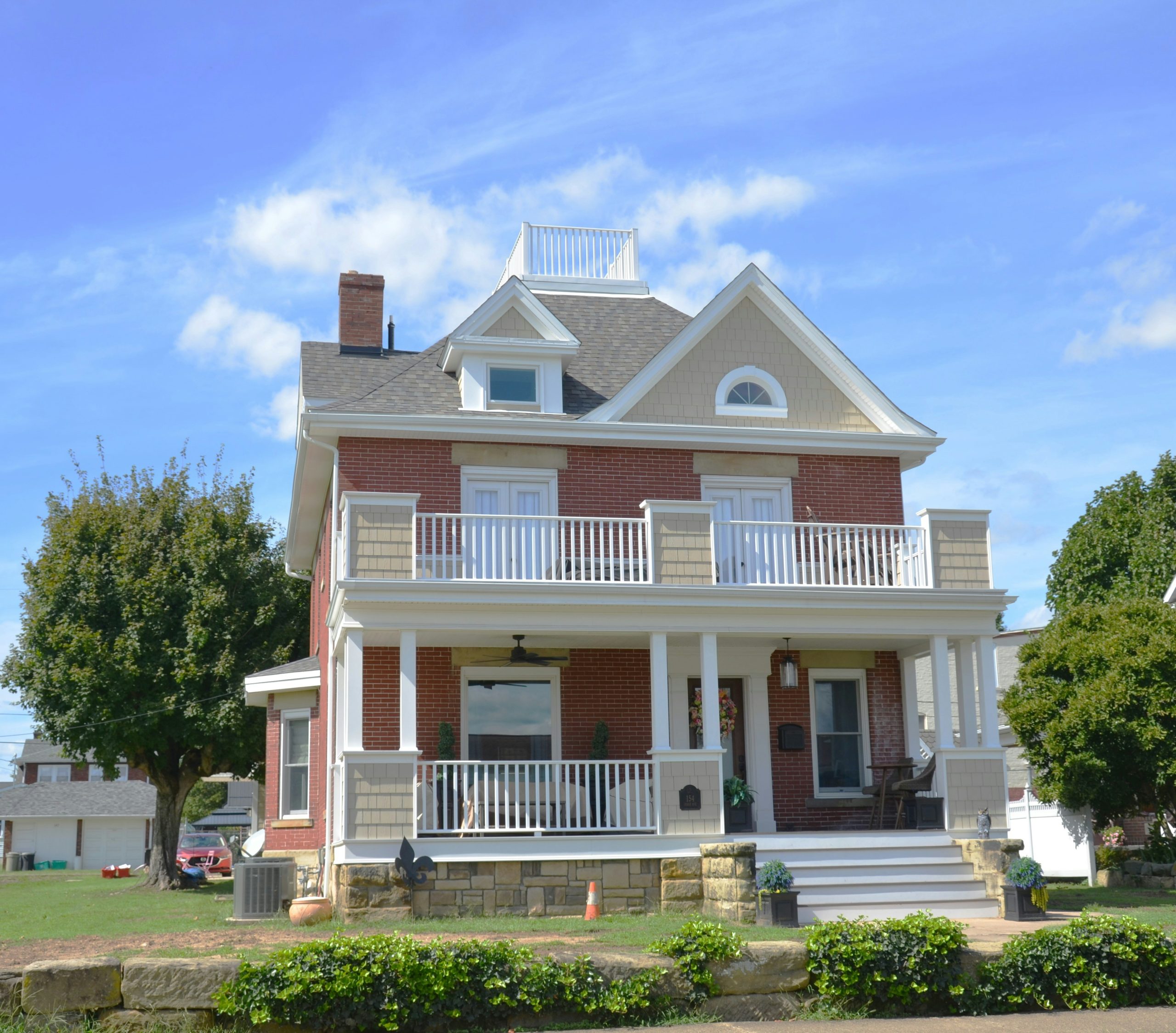
Full masonry is heavy, expensive, and requires a reinforced footing. Manufactured stone veneer sidesteps all three problems. It weighs less than 15 pounds per square foot, installs over a standard moisture barrier and metal lath, and costs a fraction of quarried stone per square foot installed.
Wrapping the base of porch columns, skirting the foundation line, or facing a single accent wall beside the door creates the illusion of a far more substantial home. Thin brick veneer does the same job in traditional neighborhoods, especially when matched to existing chimney brick.
The material pairs beautifully with fiber cement above it, which is why so many whole-home exterior upgrades lean on this exact combination. Stone at the base, cement board in the field, and crisp PVC trim at the corners gives you a layered look that reads custom without the custom price tag.
Which Hardware and Lighting Materials Last the Longest?
The small metal pieces around your entry take more abuse than any other finish. Door handles get touched thousands of times a year. Light fixtures sit in driving rain. House numbers bake in direct sun. Picking the wrong alloy means replacing everything in three to five years.
Solid brass, bronze, and 316-grade stainless steel are the workhorses. Powder-coated aluminum holds up well in dry climates but can chip at the edges near the coast. Avoid anything described as “zinc alloy” or “pot metal” for exterior use. Those finishes are made to look good in the showroom, not survive February.
Finish Choices That Age Gracefully
- Oil-rubbed bronze develops a soft patina instead of peeling
- Satin brass warms up over years without turning green
- Matte black powder coat hides water spots and fingerprints
- Brushed stainless resists both salt and chlorine splash
- Aged copper on sconces earns character with every season
Match the metal across the door hardware, kickplate, light fixtures, and house numbers. Mixing two finishes can work when done intentionally, but three or more almost always looks accidental.
How Does Landscaping Material Choice Tie Everything Together?
Hard surfaces frame the planting beds, and the wrong edging undoes the rest of the work. Thin plastic trenching sags within a year. Loose river rock scatters into the lawn. Pressure-treated timbers lean and leach.
Steel landscape edging, poured concrete curbs, and dry-stacked stone borders all outlast the plantings they contain. For walkways, large-format concrete pavers or bluestone slabs read more current than the small interlocking blocks that defined the early 2000s.
Mulch matters too. Shredded hardwood holds its color longer than dyed pine, and pea gravel in tight transition zones never needs replacing. These small material swaps keep the whole approach from looking neglected two weekends after installation.
Wrapping It Up
Transforming a tired entry isn’t about chasing trends or spending more. It’s about matching each component to the stress it actually faces, then letting those smarter materials carry the design for the next two or three decades. Fiber cement handles the walls. Composite handles the floor. Powder-coated metal handles the railings and lights. Stone veneer handles the visual weight at the base. Each one solves a specific failure point that cheaper stock creates.
When those pieces work together, the entry stops being a maintenance chore and becomes the strongest selling feature of the house. The 7% resale lift and the $20,000 perceived value jump aren’t marketing claims. They reflect what buyers feel the moment they step out of the car and look up.
Start with the one element that frustrates you most, whether that’s the rotting floor, the peeling trim, or the pitted light fixtures. Replace it with a product built to last, and let the next upgrade follow naturally. A few seasons from now, you’ll have an entryway that still looks sharp while your neighbors are repainting theirs for the third time.